











RTX 40 Series vs RTX 50 Series Overview
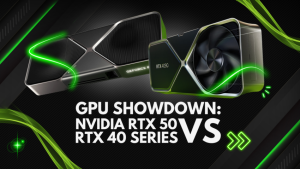
Compare RTX 40 Series and RTX 50 Series GPUs for gaming and content creation in 2026.
RTX 40 Series vs RTX 50 Series is one of the biggest discussions among gamers, streamers, and content creators in 2026. NVIDIA’s RTX 50 Series introduces new technologies, improved AI performance, faster memory, and enhanced ray tracing capabilities that promise significant improvements over the RTX 40 Series.
However, not every gamer needs to upgrade immediately. Understanding the differences between RTX 40 Series vs RTX 50 Series can help you determine whether the upgrade is worth the investment or if your current GPU still offers excellent value.
For gamers in Kuwait looking to build a new gaming PC or upgrade an existing system, comparing these two GPU generations is essential before making a purchase decision.
Blackwell vs Ada Lovelace Architecture
One of the biggest differences in RTX 40 Series vs RTX 50 Series is the underlying architecture.
The RTX 40 Series uses NVIDIA’s Ada Lovelace architecture, which introduced significant gains in ray tracing and AI-powered gaming technologies. The RTX 50 Series moves to the newer Blackwell architecture, bringing additional improvements in efficiency, AI processing, and gaming performance.
Key advantages of Blackwell include:
- Improved AI acceleration
- Better power efficiency
- Faster ray tracing performance
- Enhanced frame generation
- Improved content creation capabilities
These upgrades help make RTX 50 Series GPUs more future-ready than previous generations.
Gaming Performance Comparison
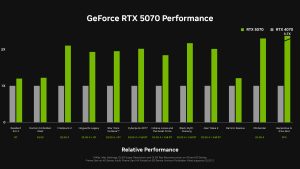
When discussing RTX 40 Series vs RTX 50 Series, gaming performance is often the primary concern.
The RTX 50 Series delivers noticeable gains in modern games, particularly at 1440p and 4K resolutions.
Performance improvements include:
- Higher average FPS
- Better ray tracing performance
- Faster frame generation
- Improved AI-enhanced rendering
- More stable performance in demanding titles
Gamers playing the latest AAA games can expect smoother gameplay and higher frame rates when upgrading from RTX 40 Series to RTX 50 Series.
RTX 5080 vs RTX 4080 Benchmarks

One of the most popular comparisons is RTX 5080 vs RTX 4080.
In many modern workloads, the RTX 5080 demonstrates:
- Faster rendering speeds
- Improved 4K gaming performance
- Better AI processing
- Higher productivity performance
- Enhanced future-proofing
For creators working with video editing, 3D rendering, and AI-assisted workflows, the RTX 5080 offers substantial advantages.
The RTX 4080 remains a powerful graphics card, but the RTX 5080 pushes performance further for demanding users.
AI Features and DLSS Improvements
Another major factor in RTX 40 Series vs RTX 50 Series is artificial intelligence.
The RTX 50 Series introduces enhanced AI capabilities through newer Tensor Cores and advanced DLSS technology.
Benefits include:
- Better image quality
- Higher frame rates
- Improved latency reduction
- Enhanced AI rendering
- Smarter upscaling technologies
As AI becomes increasingly important in gaming and content creation, these improvements add significant long-term value.
Ray Tracing Performance
Ray tracing continues to play a major role in modern gaming.
The RTX 50 Series offers:
- Faster ray tracing calculations
- Improved lighting effects
- Better reflections
- More realistic shadows
- Improved overall visual quality
Gamers who prioritize visual fidelity will benefit greatly from the newer generation.
Pricing and Value for Money

Price is one of the biggest considerations when comparing RTX 40 Series vs RTX 50 Series.
RTX 50 Series GPUs generally cost more because they offer newer technology and higher performance.
For many gamers:
- RTX 5070 provides excellent mid-range value
- RTX 5080 targets high-end gamers
- RTX 5090 serves enthusiasts and professionals
Meanwhile, RTX 40 Series cards often provide excellent value because of recent price reductions.
Budget-conscious users may find RTX 40 Series GPUs more attractive from a price-to-performance perspective.
Who Should Upgrade to RTX 50 Series?

Upgrading makes the most sense if:
- You currently use RTX 30 Series or older GPUs
- You play games at 4K resolution
- You use AI-powered applications
- You perform professional content creation
- You want maximum future-proofing
For these users, RTX 50 Series delivers meaningful benefits.
Who Should Keep RTX 40 Series?
Not every user needs an upgrade.
You can comfortably keep your RTX 40 Series GPU if:
- You mainly play at 1080p or 1440p
- You already own RTX 4070, RTX 4080, or RTX 4090
- You do not require advanced AI workflows
- You prefer maximizing value for money
RTX 40 Series remains highly capable for modern gaming.
Final Verdict
RTX 40 Series vs RTX 50 Series ultimately comes down to your budget, workload, and gaming goals.
If you currently use an RTX 30 Series card or older hardware, upgrading to RTX 50 Series provides substantial improvements in gaming, content creation, AI performance, and future-proofing.
However, users already running RTX 4070, RTX 4080, or RTX 4090 graphics cards may not need an immediate upgrade unless they require the newest AI technologies or maximum 4K gaming performance.
For most gamers and creators in 2026, RTX 50 Series represents the future of GPU technology, while RTX 40 Series remains an excellent value option for those seeking strong performance at a lower cost.